
Why is equipment calibration important? 6 reasons businesses can't ignore it.
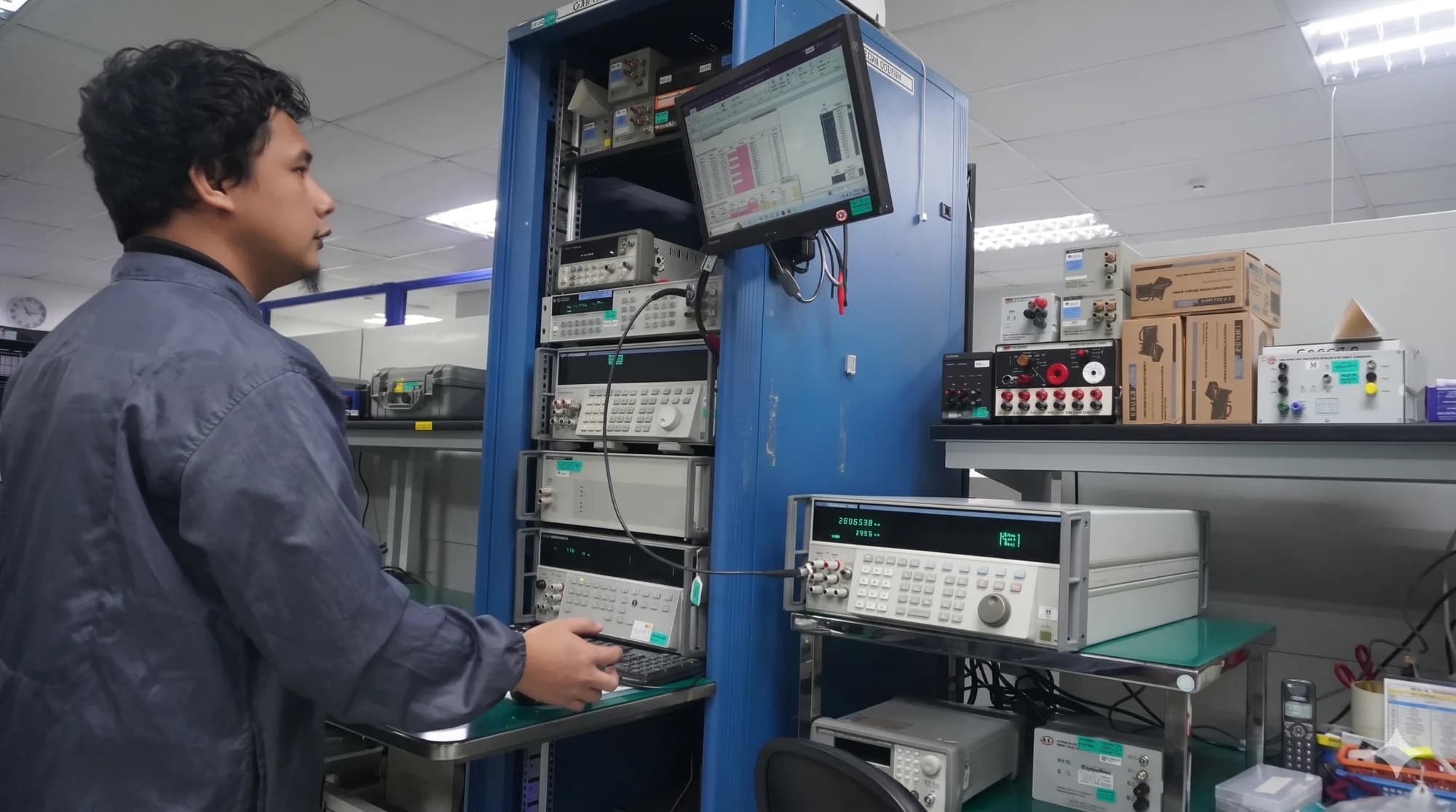
A scale that's off by a few grams or a micrometer that's wrong by a few micrometers can cause an entire shipment to be returned. Calibrating measuring equipment is how businesses can be sure their instruments are "telling the truth." This article explains what calibration is, why it's important, and when you need to recalibrate.
What is equipment calibration?
Calibration is the process of comparing the results of a measuring device with a more accurate standard . This helps determine how much the device is deviating and whether it is still usable.
After calibration, the business receives a calibration certificate . This certificate specifies the error, measurement uncertainty, and the reference standard used for comparison. This ensures that your measurement results are traceable to national or international standards.
How is calibration different from verification?
Testing is mandatory by law for certain equipment (such as commercial scales, electricity meters, water meters). The result is simply "pass" or "fail".
Calibration is usually performed proactively by the business. The results reveal specific errors, allowing for more detailed quality control.
6 reasons why equipment calibration is important
1. Ensure accurate and reliable measurement results.
All measuring devices experience some degree of error over time. This is due to wear and tear, impacts, temperature, humidity, or frequent use. The worrying thing is that this deviation is often invisible to the naked eye . The device may still display the readings normally, but those readings are incorrect. Only calibration can tell you for sure whether the device is still accurate.
2. Maintain product quality and reduce defective goods.
In manufacturing, a small measurement error can multiply into thousands of defective products. For example, a micrometer inaccurate by a few micrometers can cause a mechanical part to fit incorrectly. A drying oven thermometer inaccurate by a few degrees can ruin an entire batch of food. Regular calibration helps detect deviations early , before they become major losses.
3. Meeting ISO requirements and customer evaluations.
Most quality management systems require measuring equipment to be calibrated:
ISO 9001 (section 7.1.5) requires that measuring equipment be calibrated or checked periodically and have a reference link.
ISO/IEC 17025 is for testing laboratories and has very strict calibration requirements.
IATF 16949 (automotive), ISO 13485 (medical devices), GMP (pharmaceuticals), HACCP/ISO 22000 (food) also have similar requirements.
When clients or certification bodies come for an assessment, a valid calibration certificate is one of the first documents they examine.
4. Comply with legal regulations on measurement.
In Vietnam, the Law on Measurement No. 04/2011/QH13 and its guiding documents clearly stipulate the responsibilities for managing measuring instruments. Inaccurate measuring equipment can lead to commercial disputes, penalties, or product recalls. Proper calibration and verification help businesses avoid legal risks .
5. Cost savings in the long run
The cost of calibration is usually small compared to the damage caused by incorrect measurements: faulty goods needing to be reworked, returned orders, lost customers, and damaged machinery. Furthermore, calibration helps detect equipment failure, allowing for timely repairs or replacements, preventing unexpected production stoppages.
6. Ensuring the safety of people and property.
Many devices are directly related to safety: boiler pressure gauges, gas detectors, electrical meters, crane force scales, etc. If they malfunction, the consequences can be fires, explosions, and workplace accidents. Timely calibration is a crucial layer of protection for operators.
Which devices require calibration?
Measurement tools: calipers, micrometers, dial gauges, gauge blocks, 3D measuring machines (CMMs).
Measuring mass: electronic balances, analytical balances, standard weights.
Temperature and humidity measurement: thermometers, temperature probes, drying ovens, incubators, furnaces.
Pressure measurement: pressure gauges, pressure sensors.
Electrical measurement: multimeter, clamp meter, oscilloscope.
Force/torque measurement: torque wrench, compression testing machine.
Laboratory equipment: pipettes, pH meters, spectrophotometers, etc.
How often does calibration need to be performed?
Typically, calibration should be done every 12 months . However, it is advisable to calibrate sooner when:
The equipment is used frequently or in harsh environments.
The device has recently been dropped, bumped, repaired, or moved a long distance.
The measurement results show abnormalities.
Manufacturers, industry standards, or customers require shorter cycle times.
Businesses should create a list of equipment along with a calibration schedule to avoid missing deadlines.
How to choose the right calibration unit?
A reliable calibration unit should have:
The calibration laboratory is ISO/IEC 17025 certified and accredited by a reputable organization (e.g., ANAB, A2LA, BoA, etc.).
The measurement standard is linked to a national or international standard.
Our technical team is experienced with a wide range of equipment.
The certificate clearly states the error and measurement uncertainty.
Fast turnaround time for results , with on-site calibration support available when needed.
Frequently Asked Questions about Equipment Calibration
1. Does a newly purchased device need calibration?
Yes, calibration is recommended. New equipment can be inaccurate during shipping. Manufacturer's factory certificates are also often insufficient for ISO assessments. Pre-calibration provides you with reliable data for future monitoring.
2. What is the difference between calibration and verification?
Testing is mandatory by law for certain equipment such as commercial scales, electricity meters, and water meters. The result is simply "pass" or "fail".
Calibration is usually performed proactively by the business. The results indicate the specific error margin of the equipment.
3. How often does recalibration become necessary?
Typically, this should be done every 12 months . It should be done sooner if the equipment is used frequently, operates in harsh environments, has recently been dropped, impacted, or repaired, or when required by the customer and industry standards.
4. What happens if the equipment is not calibrated?
You may encounter risks such as inaccurate measurements, defective goods, customer returns, failure to meet ISO standards , and penalties if the equipment is subject to mandatory management. With safety-related equipment, inaccurate measurements can even lead to accidents.
5. What information does a calibration certificate contain?
A complete certificate typically includes: equipment information (name, serial number), calibration date, measured error , measurement uncertainty (the possible variation of the result), the standard used for comparison, environmental conditions, and the signature of the person responsible.
6. Is it possible to calibrate the device at the factory instead of sending it elsewhere?
Yes. Many types of equipment can be calibrated on-site, especially large, fixed equipment or equipment that cannot be shut down for long periods, such as platform scales, furnaces, drying ovens, and pipeline pressure gauges.
7. How long does it take to calibrate a device?
Depending on the type of equipment. Simple devices like calipers and thermometers are usually completed within 3-5 business days . More complex or large-scale equipment may take longer. Scheduling in advance is recommended to avoid disrupting production.
8. What should be done if the equipment fails the calibration?
Businesses can calibrate (correct), repair, downgrade to use for applications that don't require high accuracy, or replace the equipment with a new one. They should also review all products measured with that equipment since the last calibration.
9. How can I identify a reputable calibration unit?
Check if the unit has an ISO/IEC 17025 accredited calibration laboratory , the measurement standards are linked to national or international standards, and the certificate contains complete information.
Conclude
Equipment calibration is not just a formality to "get a certificate." It's the foundation for product quality, customer trust, and production safety . Investing in regular calibration is an investment in giving businesses peace of mind regarding every measurement they obtain.
👉 Need calibration for your measuring equipment or advice on scheduling calibrations? Contact Micro Precision for a quote and prompt support.